Search for answers or browse our knowledge base.
To Add an Allegation
This document provides the steps to add the allegations given by the complainant. The initial stage in this process involves identifying the allegations in the complaint filed by the aggrieved woman.
An allegation, in the context of a complaint, refers to a specific claim or assertion made by the complainant about an action or behaviour of the respondent. These allegations are the key issues or incidents that the complainant believes to be violations of rules, policies, or laws, and they serve as the basis for the complaint. Incorporating the allegations raised by the complainant can serve as a roadmap for the inquiry process, directing the investigation to concentrate on the specific issues or claims presented by the complainant. This ensures that the inquiry’s efforts are targeted and efficient in addressing the concerns and allegations that have been brought forward, rather than pursuing a broader, less focused examination.
Login to the Complaint Management System and click on a complaint to view it.
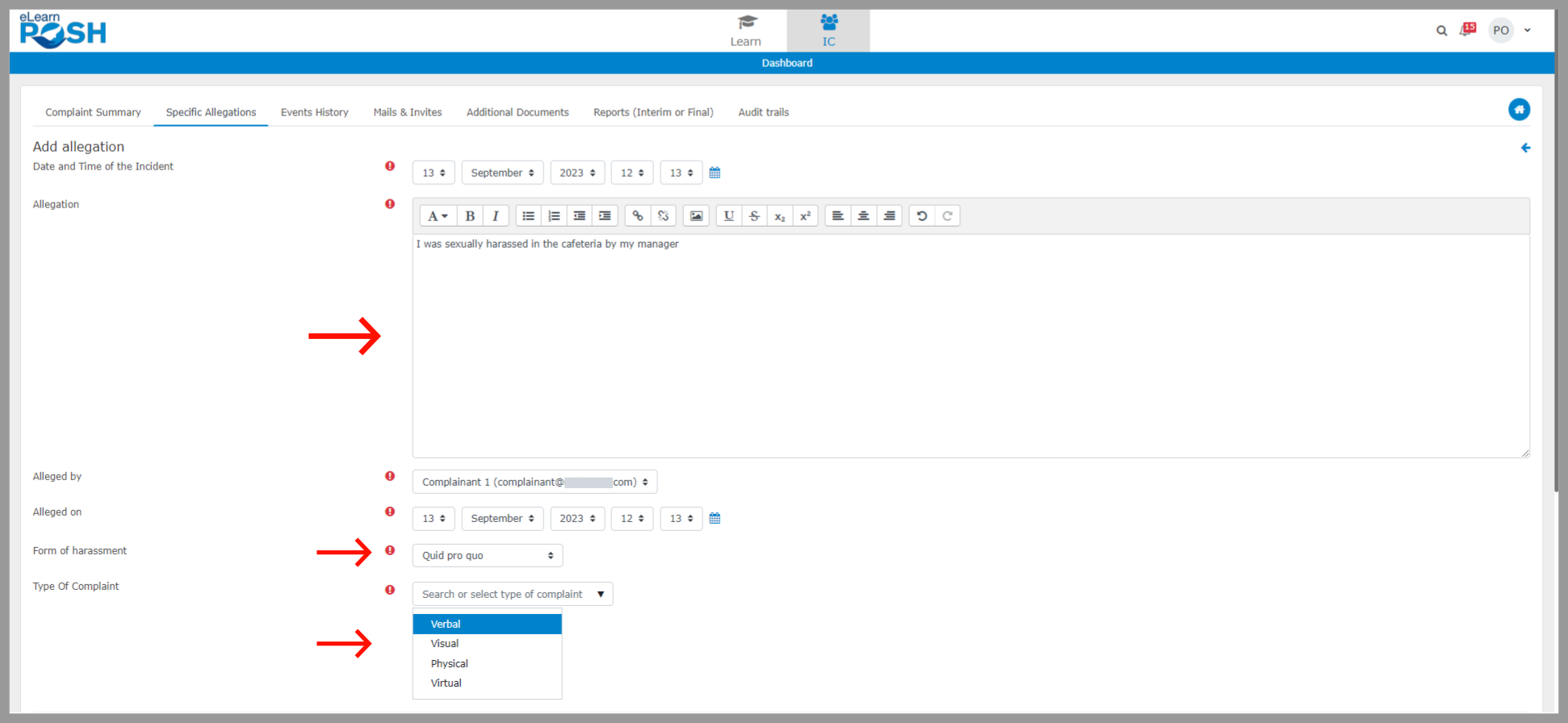
Step 1: Select “Specific Allegation” and then “Add Allegation”. Step 2: Please include the details regarding the Allegation, form of harassment, and type of complaint.
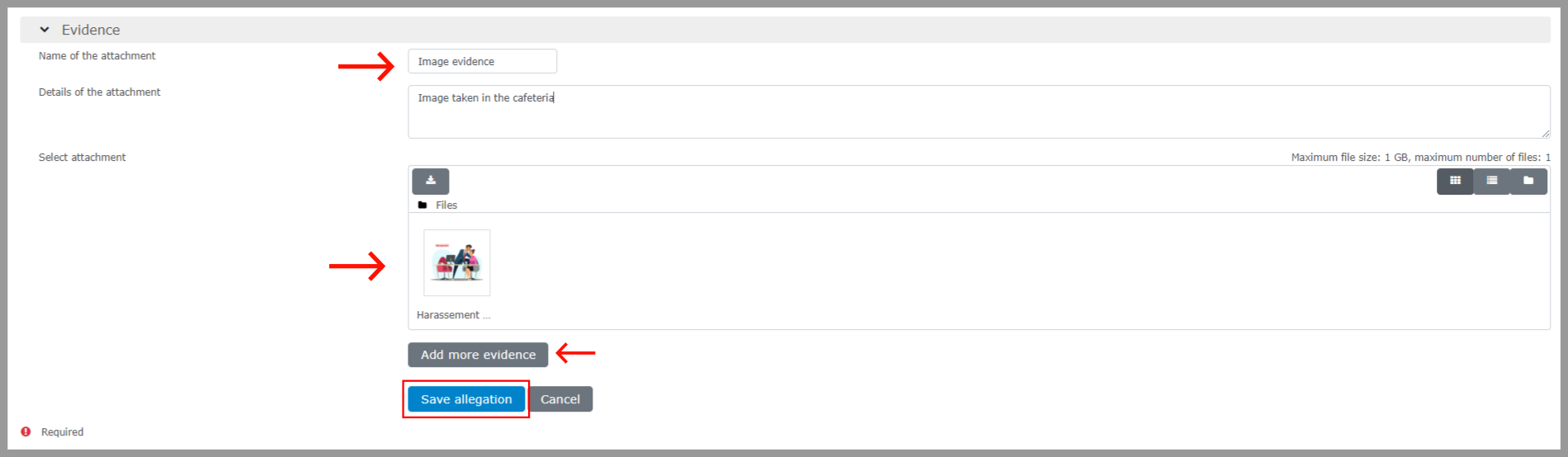
 Step 3: Include the details of the evidence and the evidence. In case, you have more than one evidence, you may add by selecting “Add more evidence”.
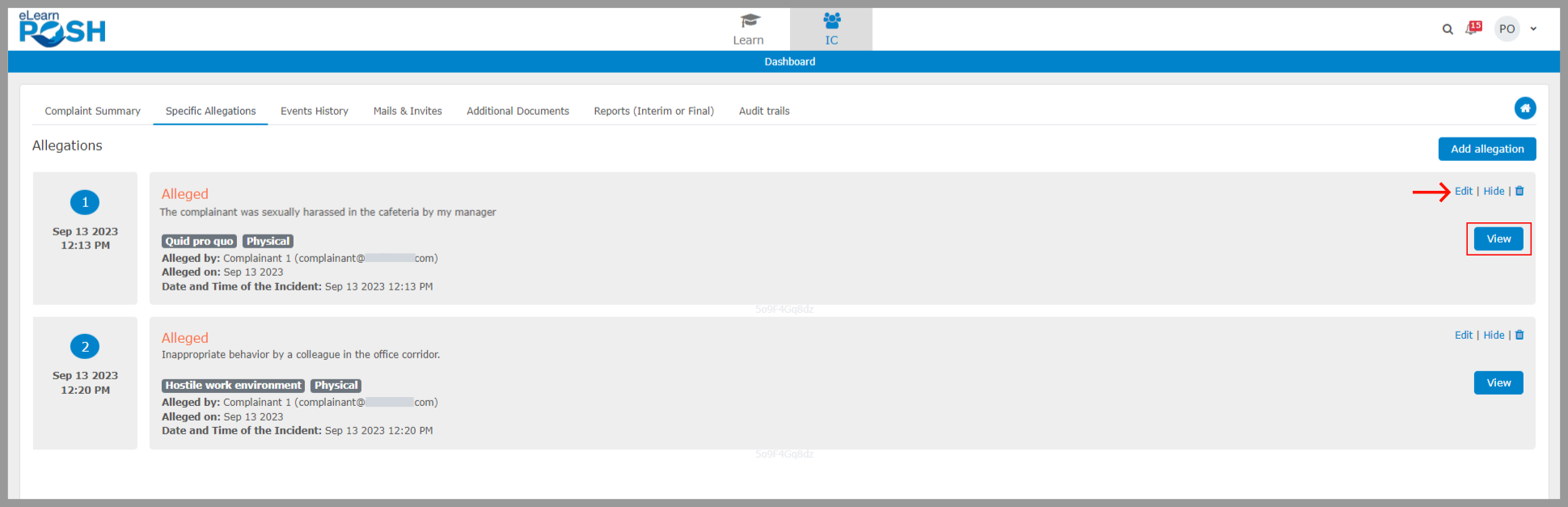
 All the included allegations will be accessible in the “Specific Allegations” section. You can view, edit, hide, or delete them at any time.
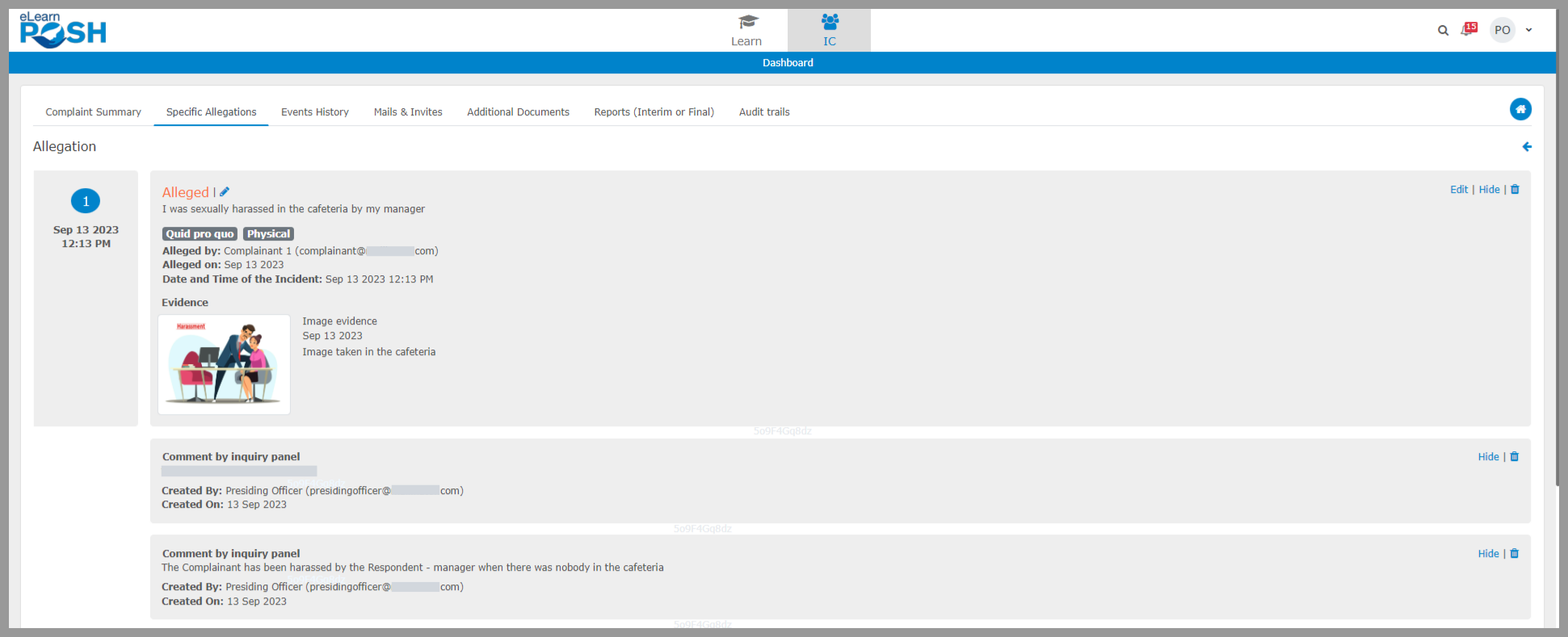
  The members of the Inquiry Panel can provide their observations and evidence for any specific allegation from their end.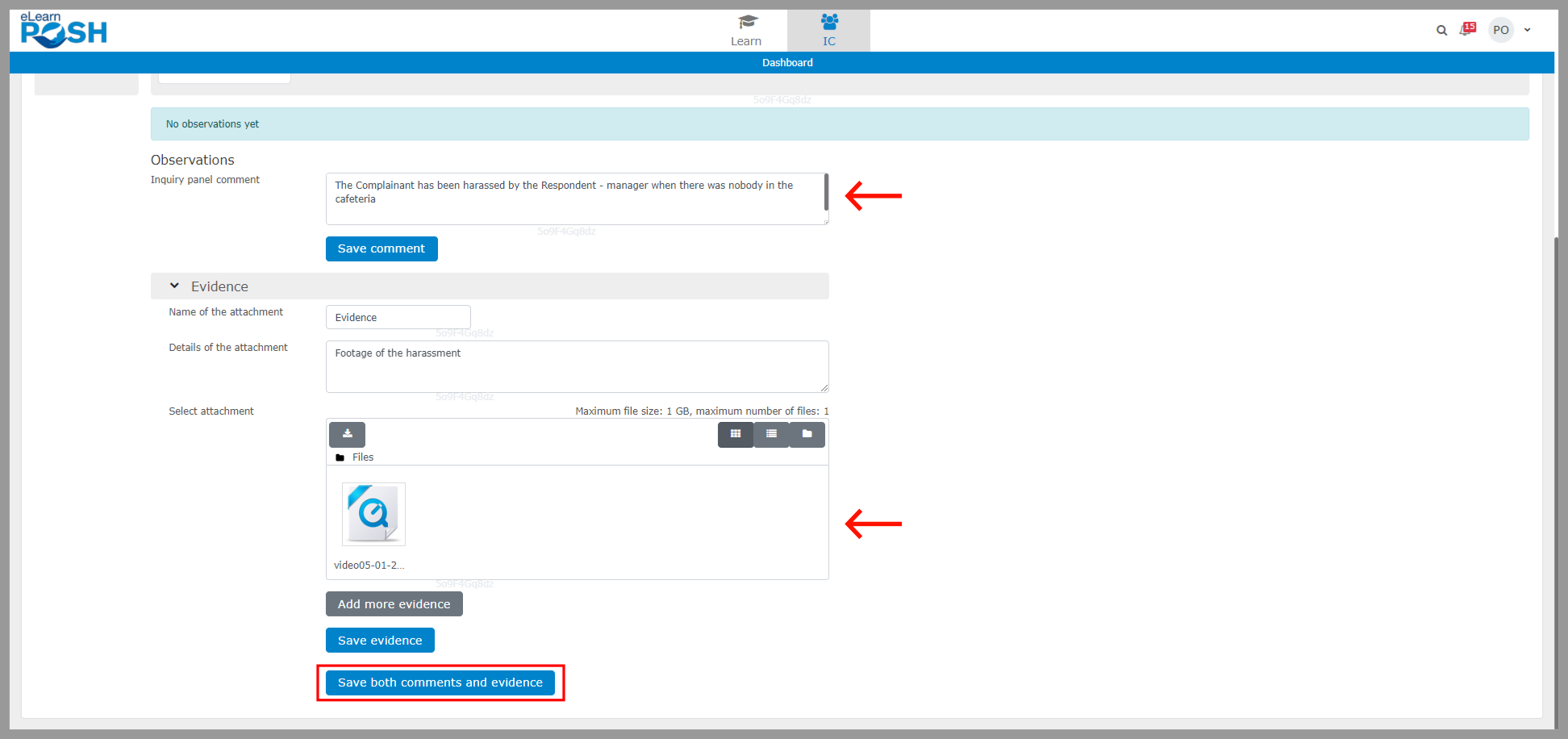
The observations and evidence added by any member of the panel will be visible to all members of the inquiry panel. This is done to ensure transparency among the members of the inquiry panel. It reduces the likelihood of any information being withheld or creating a biased inquiry.